


DFMT professors give interviews to Versatus HPC and discuss high-performance computing and new materials
São Paulo, October 28, 2026
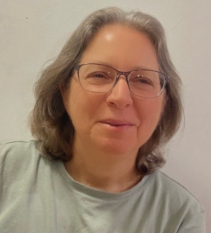
Two researchers from the Department of Materials and Mechanics Physics (DFMT) of the Institute of Physics of USP, Prof. Dr. Helena Petrilli and Prof. Dr. Gustavo Dalpian, gave interviews to Versatus HPC. What they share is the same backdrop: high-performance computer simulations as a central tool of materials physics, both in the infrastructure that supports research in the country and in the discovery of new materials before synthesis in the laboratory.
Who should own Brazil's scientific computing cluster?
In the interview, Professor Helena Petrilli raised an important discussion in academia: who should own the computational resources allocated to high-performance computing (HPC) in Brazil? The research group? The institute? The university? The country?
For the researcher, there is no single answer, and that is precisely the discussion she argues the country should have. Beyond the large institutional clusters (maintained by departments, institutes, universities and state/federal governments), she is fully in favor of research groups having their own clusters. Such diversification, she argues, would provide direct support for each group's research. At the same time, her own research is 100% dependent on large HPC centers. She works on the materials that underpin the technologies of the future, on the search for alternatives to lithium for next-generation batteries, and on spintronics. For the professor, it is not a matter of choosing one side: institutional centers guarantee scale and capacity for large projects, while group-dedicated clusters accelerate the research cycle and give scientists more agility in their daily work.
How computing "invents" new materials
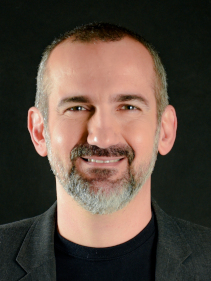
Prof. Gustavo Dalpian, in turn, explained how simulations based on quantum physics make it possible to invent new materials on the computer before any experiment. Using methods derived from quantum physics, such as Density Functional Theory (DFT), it is possible to simulate the behavior of every atom and every electron in a material before any synthesis. "When we say we invented a material on the computer, in principle it exists as a possibility," the researcher explains, the simulation suggests that a material never synthesized could exist, that is, that it is synthesizable. "The computer works 24 hours a day, 7 days a week."
Among the materials studied by the researchers in Prof. Dalpian's group are halide perovskites, structures in which atoms move considerably throughout the material, to the point of appearing "liquid" to experimentalists. From this observation, the group proposed that the crystal structure of these materials was in fact polymorphic: what X-ray diffraction recorded was only the average of the atoms' positions. Some time later, X-ray and neutron diffraction experiments confirmed the proposal — a work the researcher is very proud of.
The methodology, Dalpian acknowledges, has limitations: DFT tends to underestimate the gap energy, and simulating temperature effects and slow processes is still challenging. The answer comes from new methods: "today we have machine learning potentials that allow us to simulate much longer times and different temperatures." In the technological field, he points to semiconductors as the heart of electronics and argues that Brazil should seize the opportunity of rare earths, investing also in methods for purifying these materials.
Computing as the foundation of materials research
The two interviews, given to the same outlet, highlight the central role of high-performance computing in contemporary research in materials physics: for Prof. Helena, it is the infrastructure whose distribution across the country must be discussed in order to better develop her research using materials simulations; for Prof. Dalpian, it is the tool that allows discovering, and inventing, the materials of the future. At DFMT, both fronts go hand in hand.
Watch the full interviews:
Interview with Prof. Helena Petrilli (on YouTube)
Interview with Prof. Gustavo Dalpian (on YouTube)