IFUSP na Mídia

Pesquisador Ivã Gurgel tem novo livro publicado pela Livraria da Física

Já está disponível pela Livraria da Física o o livro "História Cultural das Ciências e Educação - Discutindo Fronteiras", organizado pelos pesquisadores Ivã Gurgel (IFUSP) e Andreia Guerra (CEFET-RJ). Além da coordenação do material, Gurgel também apresenta, no livro, o capítulo "Influências Culturais na Física Quântica: recepção e debates em torno da tese de Forman", em coautoria com Sofia Guilhem Basílio, pesquisadora a quem orientou em doutoramento.

Confira o texto de capa da obra e, para adquirir, acesse a loja virtual.

--

Todo livro tem uma história, e esse não é diferente. Como toda história, é dificil atribuir um fato ou um personagem que indique quando esse projeto se iniciou, isto é, História Cultural das Ciências e Educação: Discutindo Fronteiras foi um livro desenvolvido a partir de vários acontecimentos. Entretanto é possível afirmar que suas origens estão nos diálogos e nos encontros tanto de pessoas como de áreas do saber.

A História Cultural das Ciências busca ressignificar seu objeto de estudo ao compreender as ciências como práticas que sustentam diferentes modos de significação. Assim, ela busca entender o que tem sustentado a ciência socialmente, culturalmente e materialmente e quem se beneficiou ou não com sua formação. Perspectivas como essas estudam casos históricos com vistas a analisar a circulação do conhecimento, como forma de problematizar e eurocentrismo e compreender a contribuição de diferentes lugares, pessoas e materiais na formação das ciências. Isso inclui atores sociais não visibilizados, como escravizados, indígenas e mulheres.

Essa virada na História das Ciências acaba por problematizar as desigualdades, violências e intercâmbios que perpassam o desenvolvimento cientifico e com isso se mostram potenciais caminhos para as temáticas hoje consideradas importantes na Educação em Ciências. É importante sempre lembrar que a educação é um ato politico e, dessa forma, pensar o ensino de ciências é desenvolver um projeto de sociedade.

Cientistas premiados defendem a Física para além de suas aplicações na sociedade

Por: Sociedade Brasileira de Física, em 23/05/2025. Acesse AQUI.
--

"1905 é uma data que entrou para a história da humanidade. Esse foi o ano em que Albert Einstein desenvolveu suas mais importantes teorias. Como a física alimenta a humanidade desde que nasceu, podemos dizer assim, com as questões levantadas pelos filósofos pré-socráticos, até a atualidade, 1905 foi tão marcante que acabou virando a data em que se comemora o Dia do Físico , representando o Dia da Física e de quem se dedica a ela."

*Participação do Prof. Neilo Trindade, do IFUSP.

-> Saiba mais...


Artigo | Forest Degradation Is Undermining Progress on Deforestation in the Amazon

Forest Degradation Is Undermining Progress on Deforestation in the Amazon


Dos autores Guilherme Mataveli, Lucas Andrigo Maure, Alber Sanchez, Débora Joana Dutra, Gabriel de Oliveira, Matthew W. Jones, Cibele Amaral, Paulo Artaxo, Luiz E. O. C. Aragão
Publicado em Global Change Biology.
--

Abstract:

The 30th Conference of the Parties (COP30) of the United Nations Framework Convention on Climate Change (UNFCCC), to be held in Belém, provides a unique opportunity for Brazil to affirm its commitment to protecting Amazon forests and to showcase leadership in aligning ambitious climate action with global conservation goals. Encouraging progress has been made in controlling deforestation in the Amazon (Figure 1a–d). The 2024 preliminary Brazilian Amazon official deforestation increment estimate was 5816 km2, 27.5% below 2023 and a staggering 54.2% below 2022 (INPE 2025). This is the lowest annual deforestation increment in a decade and 26.4% below the average of the 2008–2024 period (INPE 2025). Such achievement is closely tied to the restoration of command and control in the Amazon, highlighted by the reinstatement of the Action Plan for the Prevention and Control of Deforestation in the Legal Amazon (PPCDAm) (MMA 2023). Nevertheless, deforestation is not the only threat facing Amazon's forests.

-> Saiba mais...


Degradação da Amazônia cresce 163% em dois anos, enquanto desmatamento cai 54% no mesmo período

‘Saldo negativo’ da proteção do bioma registrado entre 2022 e 2024 pode comprometer metas internacionais do Brasil, alertam pesquisadores do Inpe e colaboradores na revista Global Change Biology
Por Agência FAPESP em 15/05/2025
. Acesse AQUI.
--

"O outono é uma estação marcada pela transição das temperaturas mais altas do verão para as mais baixas do inverno. Também é possível notar uma mudança no céu, que tende a ficar mais azul ao longo desse período. Mas você já se perguntou por que esse fenômeno ocorre justamente nessa época do ano?"

*Repercussão de trabalho do Prof. Paulo Artaxo.

-> Saiba mais...


O céu é mais azul no outono? Entenda as razões físicas por trás do fenômeno

Por CanalTech. Acesse AQUI.
--

"O outono é uma estação marcada pela transição das temperaturas mais altas do verão para as mais baixas do inverno. Também é possível notar uma mudança no céu, que tende a ficar mais azul ao longo desse período. Mas você já se perguntou por que esse fenômeno ocorre justamente nessa época do ano?"

*Participação do Prof. Alexandre Correia, do IFUSP.

-> Saiba mais...


Experimento transforma pequena quantidade de chumbo em ouro na Suíça

Transformação ocorre em acelerador de partículas, mas ouro dura frações de segundo. 
Por R7 - Fala Brasil.
Acesse AQUI.
--

"Cientistas realizaram um experimento na Suíça que transforma microscópicas quantidades de chumbo em ouro, utilizando o maior acelerador de partículas do mundo. O processo observou interações atômicas indiretas, gerando ouro que dura apenas frações de segundo. Essa transformação, mais próxima de ficção científica, representa um avanço no entendimento sobre as interações atômicas."

*Participação do Prof. Alexandre Suaide, do IFUSP.

-> Saiba mais...


USP apresenta contribuições para diretrizes nacionais sobre estágio dos cursos de Licenciatura

A Pró-Reitoria de Graduação criou um grupo de trabalho para apresentar as colaborações da Universidade para a consulta pública do Conselho Nacional de Educação (CNE) sobre o tema.
Por Jornal da USP. Acesse AQUI.
--

"A Pró-Reitoria de Graduação criou um grupo de trabalho (GT) para apresentar as contribuições da Universidade para a consulta pública do Conselho Nacional de Educação (CNE) a respeito do projeto de resolução que definirá as diretrizes nacionais para o planejamento e a realização de Estágio Curricular Supervisionado dos Cursos de Formação Inicial em Nível Superior de Profissionais do Magistério da Educação Escolar Básica. A consulta foi lançada pelo CNE no último dia 28 de março e recebeu as contribuições até o dia 30 de abril."

*Participação do Prof. André Machado Rodrigues, do IFUSP.

-> Saiba mais...


Artigo | Particulate and Gas Emissions from Wildfires in the Southern Amazon, from 2020 to 2022, from GOES-16 Fire Radiative Power Retrievals

Particulate and Gas Emissions from Wildfires in the Southern Amazon, from 2020 to 2022, from GOES-16 Fire Radiative Power Retrievals
Dos autores Thiago Ferreira da Nobrega e Alexandre Lima Correia.
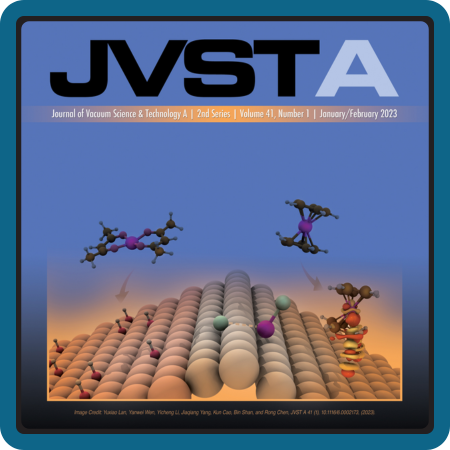
Artigo selecionado como front cover do periódico ACS ES&T Air.
--

Abstract

This study delves into the Amazon Basin, which is pivotal for global climate regulation but is threatened by human activities. This work uses geostationary satellite GOES-16 data from 2020 to 2022 to study fire patterns and emissions in the southern Amazon. The Fire/Hotspot Characterization algorithm processes GOES-16’s Advanced Baseline Imager data, providing insights into fire dynamics with an unparalleled temporal resolution of 10 min. This allows one to retrieve a more accurate temporal evolution of wildfire radiative power, and emission estimates, than previous efforts based on polar satellites. Results for 2020 show an average burn activity radiative power cycle duration of approximately 4.56 h, temperature ranges estimated for the flaming (829 K to 1188 K) and smoldering phases (433 K to 686 K), and an average active fire area size of 0.464 km2. Using the FEER (Fire Energetics and Emissions Research) emission inventory, emissions for CO2, CO, CH4, and TPM (Total Particulate Matter) during peak fire activity (days of the year 150–350) were estimated. Between 2020 and 2022, the yearly total emissions increased from 434.7 to 523.8 Tg for CO2, 27.91 to 33.63 Tg for CO, 1.744 to 2.102 Tg for CH4, and 2.33 to 2.81 Tg for TPM. The outcomes enhance understanding of Amazon wildfires, their emission fluxes, and environmental implications, contributing valuable insights to the complex Amazon Basin ecosystem.

-> Acesse o trabalho na íntegra


Artigo | Analysis of invariant spanning curves in oval billiards: A numerical approach based on Slater’s theorem

Analysis of invariant spanning curves in oval billiards: A numerical approach based on Slater’s theorem 
Dos autores Joelson D. V. Hermes, Matheus Hansen, Sishu S. Muni, Edson D. Leonel e Iberê Luiz Caldas. 
Publicado em Chaos.
--

Abstract

The study of billiards investigates the trajectories of particles that move freely in a region and reflect elastically at boundaries. Although there is already considerable understanding about invariant spanning curves, also known as whispering gallery orbits in the context of billiards, their determination in the phase space of the system, in addition to the analysis of their existence is still an open question. Our proposal is to present a numerical method based on Slater’s theorem, capable of determining the location of these curves in phase space, as well as finding the critical parameter at which these curves are no longer observed. In this work, we apply this method to determine the location of a set of invariant spanning curves in an oval billiard for different parameter values. Furthermore, we identified the critical parameter at which the phase space no longer presents these curves and local chaos becomes global. We compared our numerical results with analytical results present in the literature, proving the effectiveness of the proposed method. By studying the rotation number, we obtain additional information about the behavior of these curves and also of the systems.


-> Acesse o trabalho na íntegra


Artigo | Effect of heat treatment and gamma irradiation on TL emission sensitivity of blue quartz crystal

Effect of heat treatment and gamma irradiation on TL emission sensitivity of blue quartz crystal 
Dos autores Betzabel N. Silva-Carrera, Nilo F. Cano, Felix V.S. Cruz, Edwin J. Pilco, T.K. Gundu Rao, J.F. Benavente e José F.D. Chubaci. 
Publicado em Physica B: Condensed Matter.
--

Abstract

The combined effect of heat treatment and irradiation on the thermoluminescent response of natural blue quartz was studied. Samples were subjected to different heat treatment temperatures, pre-dose doses, and thermal activation temperatures to sensitize the Thermoluminescence (TL) response of blue quartz. Blue quartz pellets produced by sintering at 1200 °C were sensitized with a combination of different pre-doses and thermal activation temperatures. It was found that the maximum TL intensity occurred for a pre-dose of 500 Gy and a thermal activation temperature of 550 °C, resulting in a dosimetric peak with a TL signal 150 times more intense than the initial one. The kinetic parameters of the TL glow curve of the sensitized pellets were analyzed by the methods of different heating rates, Tm-Tstop, and deconvolution. The dosimetric properties of the sensitized blue quartz pellets were also evaluated using the 220 °C TL peak.


-> Acesse o trabalho na íntegra


Páginas

Desenvolvido por IFUSP